
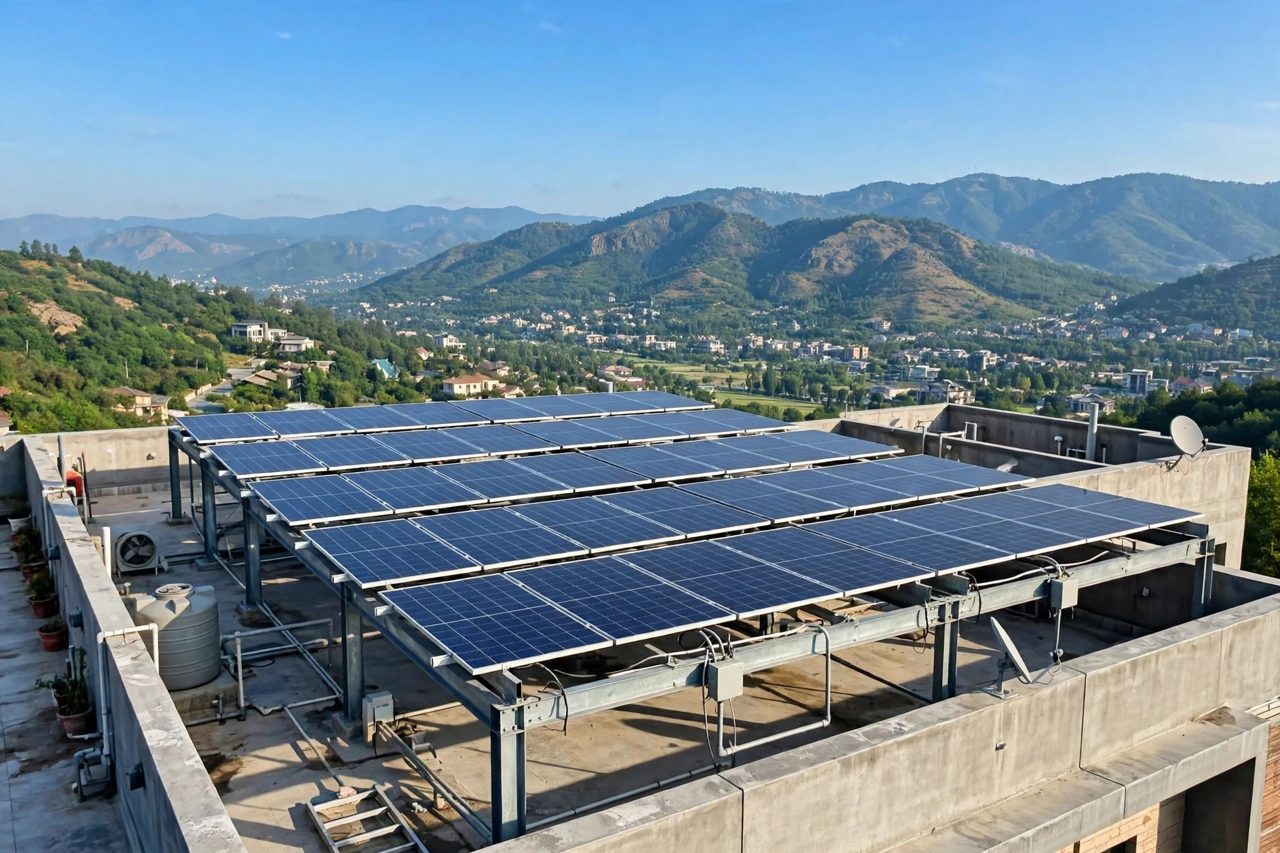
A home solar system is sized from monthly units, not from roof size or guesswork. This guide walks through the bill first method AR Engineering uses in Islamabad and Rawalpindi.
Start with your bill, not your roof
Most sizing mistakes begin with a guess. Take your last twelve IESCO bills if you can, or at least one summer and one winter bill. Your average monthly units are the target your system must cover. A home using 600 units a month needs a very different system from one using 1,400 units, even if both roofs look the same size.
Convert units into system size
In the twin cities, each kilowatt of well placed solar commonly generates around 120 to 150 units a month across the year. So a 600 unit home usually lands near 5 kW, and a 1,200 unit home near 10 kW. Direction and shade move these numbers, which is why a survey follows the maths.
Decide the battery question early
Sizing is not only about panels. If load shedding matters, your essential load, fans, lights, fridge, Wi-Fi and one or two careful extras, decides your battery bank. Deciding this at the start is the difference between a hybrid system that works and one that disappoints.
Leave export in its place
Size for what you use, not for what you can export. Export credit is a bonus, not the business case. Oversizing for export is the first mistake in our published guide, and it stretches your payback for no good reason.